
01 Facts & context
BC technology narrative and the real decision-making dilemmas of photovoltaic customers
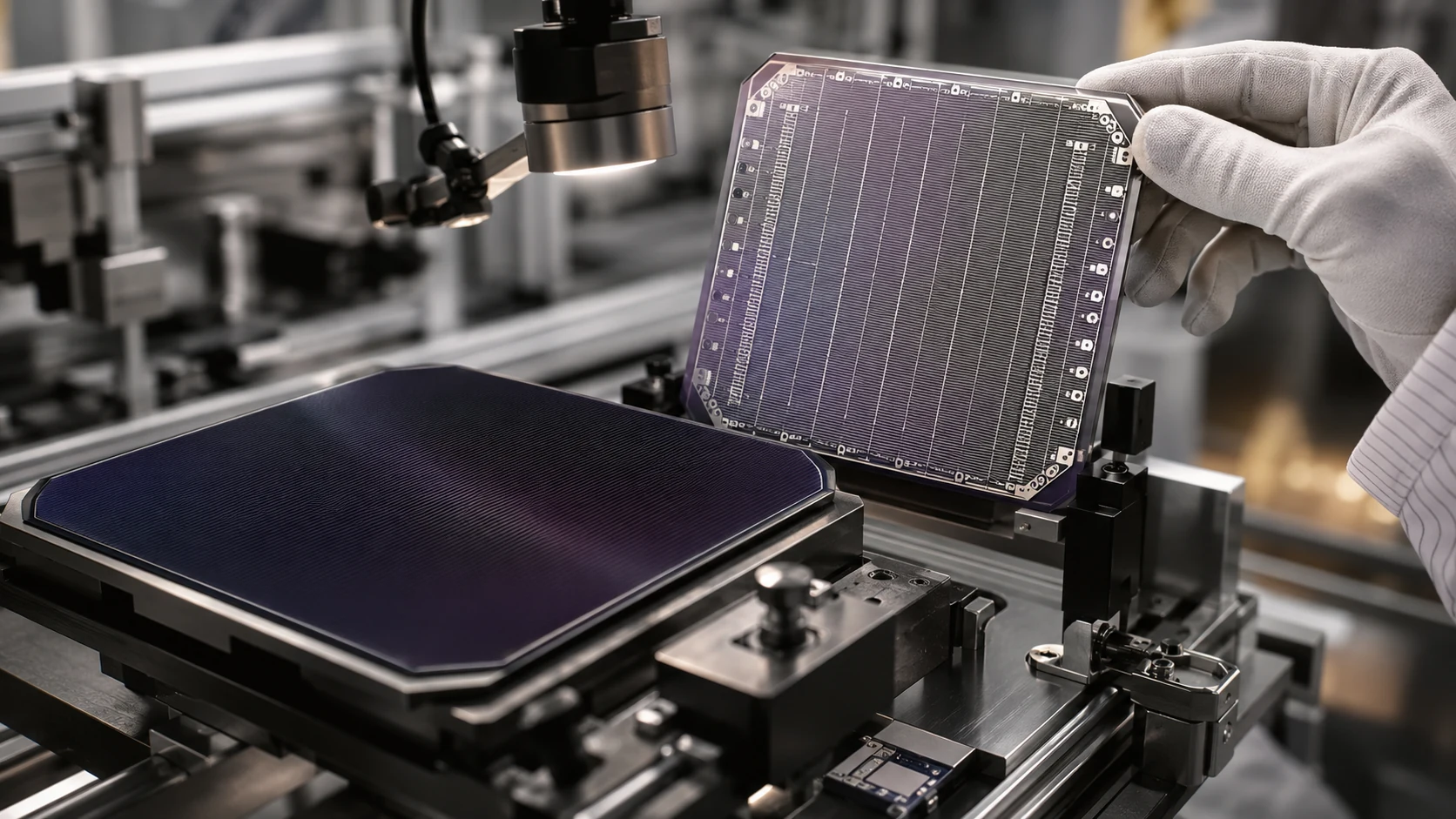
LONGi Green Energy discussed BC technology, HPBC second-generation capacity ramp-up, and cost-efficiency management in materials related to its 2025 annual results, reflecting its approach to organizing product communication around a differentiated technology route. For photovoltaic companies, a technology name can provide a clear recognition cue, but customers ultimately need to understand how this route addresses efficiency, reliability, and project conditions. LONGi's case is suitable for observing how technology branding moves from R&D narrative to product value. The task of brand positioning is to establish a clear professional direction while providing an information entry point for subsequent model selection, system design, and procurement verification.
Procurement decisions for photovoltaic power stations typically involve multiple stakeholders: investors focus on long-term power generation returns, engineering contractors focus on installation and maintenance convenience, and designers focus on system compatibility. If BC technology claims efficiency advantages, these must be verified under actual irradiance, temperature, shading, and other conditions. LONGi's public materials place BC alongside HPBC second-generation capacity ramp-up, implying a link between technology maturity and mass production capability, but customers often lack direct comparative data in the early stages of a project. Therefore, technology branding must answer a specific question: under the same area and cost constraints, can BC modules deliver measurable power generation gains? This requires companies to provide scenario-specific evidence rather than relying solely on laboratory efficiency.
For LONGi, the starting point of the technology narrative is to make customers remember BC, but the endpoint is to have customers specify BC in tender documents or at least include it in their shortlist. This requires bridging a trust gap. Customers may worry about the long-term reliability of new technologies, as photovoltaic modules can have long operating lifetimes, but the original text does not provide data on the outdoor operational track record of BC technology. LONGi's annual materials mention cost-efficiency management, which helps alleviate concerns from price-sensitive customers, but reliability still needs to be proven through warranty terms, third-party testing, and grid-connected projects. Therefore, brand recognition is only the entry point; the real business issue is how to transform technical features into a calculable risk-adjusted return for customers.
Capacity and sales illuminate technology commercialization
Year-end 2025 capacity and full-year 2025 sales; distinct measures
- In-house cell capacity [1]
- 46GWYear-end HPBC 2.0 cell capacity
- Partner cell capacity [1]
- 11GWYear-end collaborative HPBC 2.0 capacity
- BC module sales [1]
- 22.87GWFull-year sales, not year-end capacity
Capacity describes the manufacturing base; sales describe commercial delivery. Their ratio is not a utilization rate.
- [1] LONGi 2025 annual-results release ↗High-efficiency BC products; global intellectual property · 2026-04-29 · Accessed
02 GSP analysis
The gap between technology narrative and customer value verification
GSP analysis suggests that LONGi's core contradiction is not a lack of technology story, but a gap between the story and customer value verification. Photovoltaic customers do not buy battery structures; they buy levelized cost of electricity and return on investment. If BC technology's high efficiency cannot be translated into system-level benefits, its brand significance diminishes. For example, BC modules with lower bifaciality may lose rear-side power generation on ground-mounted plants with high albedo, while monofacial applications can leverage efficiency advantages. LONGi's public materials do not differentiate applicable scenarios in detail, which may lead to customer misuse or underestimation.
The value creation step occurs during the product selection phase. When design institutes conduct simulation calculations for power generation, module parameters such as temperature coefficient, low-light response, and degradation rate are directly input into models. If BC modules have advantages in these parameters, they can be reflected in simulations, but customers need to trust the authenticity of these parameters. LONGi's HPBC second-generation products claim efficiency improvements, but customers will compare them with competitors like TOPCon and HJT. If LONGi can provide comparative data under the same project conditions, the value can be quantified; otherwise, the technology narrative remains at a conceptual level.
Another gap is delivery capability. In project procurement, customers consider not only module performance but also supply lead times and capacity assurance. LONGi discusses capacity ramp-up in its annual materials, implying that production is increasing, but yield rates and consistency during the ramp-up period may affect customer confidence. If customers worry about delivery delays due to insufficient capacity, they may switch to more mature technologies. Therefore, technology branding must progress in tandem with manufacturing maturity. LONGi needs to communicate milestones in capacity ramp-up, such as yield improvements or cost reductions, but these data are often trade secrets and are not publicly disclosed. This leaves customers relying on indirect signals, such as media reports or industry analyses, thereby increasing uncertainty.
03 GSP analysis
The reasoning chain from R&D parameters to system benefits
For companies seeking to learn from this case, the value of technology branding lies in establishing a clear reasoning chain from R&D parameters to system benefits. LONGi's case shows that companies need to translate metrics such as cell efficiency, temperature coefficient, and degradation rate into what customers care about: power generation, levelized cost of electricity, and payback period. This requires close collaboration between marketing and product departments to develop calculation tools or comparative case studies that customers can directly use. For example, suppose a module manufacturer introduces a new cell technology with improved efficiency and different temperature characteristics. These parameter differences may affect annual generation in a particular project, but the magnitude requires assessment using local climate and system design assumptions; it cannot be inferred from a single indicator. The company should produce simulation reports tailored to high-temperature scenarios rather than just issuing efficiency press releases.
The next step in the reasoning chain is verification. Customers will not make decisions based solely on company-provided simulation data; they need third-party certifications or independent tests. Companies drawing lessons from the case can consider agreeing verification methods and their scope with suitably qualified independent testing organizations. Companies should proactively disclose these test results and explain their relevance to customer projects. For example, if BC modules perform well in hot and humid environments, the company should emphasize their suitability for projects in Southeast Asia or southern China, rather than making general claims.
Finally, the reasoning chain needs to connect to installation and maintenance. If a new module changes installation, wiring or maintenance requirements, the supplier should explain those changes and provide corresponding guidance to installers and maintenance teams. If the company can provide detailed installation guides and operational support, it can reduce customer switching costs. LONGi's sustainability page mentions R&D but does not specify its customer support system. For those seeking to emulate, they should design a complete evidence chain from sales to after-sales, ensuring each step answers a specific customer question. This way, the technology brand becomes a verifiable value proposition rather than an abstract concept.
04 GSP analysis
The flow of information and responsibility in the project procurement chain
In photovoltaic project procurement, information flows from module manufacturers to design institutes, EPC contractors, investors, and operations and maintenance teams, each with different information needs. LONGi's technology branding must ensure information is not distorted during transmission. For example, design institutes need precise electrical parameters for array design, EPCs need installation dimensions and weights for construction planning, and investors need degradation warranties and performance guarantees to assess financial risks. If LONGi only provides product brochures without tailoring information packages for different roles, customers may misunderstand technical characteristics.
A specific handoff point occurs between design institutes and procurement departments. Design institutes complete power generation simulations based on module parameters and recommend a technology solution; procurement departments then select suppliers based on price and supply conditions. If LONGi's BC module efficiency advantage is reflected in simulations but the price is higher than competitors, procurement may abandon it due to budget constraints. In this case, LONGi needs to provide a life-cycle cost analysis, proving that the initial investment increase can be offset by power generation gains. This requires the sales team to have financial knowledge and be able to communicate directly with customers' finance departments.
Another handoff point is the project acceptance phase. Customers may conduct spot checks on modules upon arrival to verify power and appearance. If the actual power of BC modules deviates significantly from the nameplate, customer trust is damaged. LONGi should establish a transparent quality traceability system, allowing customers to query test data for each batch of modules. Meanwhile, operations and maintenance teams monitor power generation performance during project operation; if anomalies are found, they will trace back to the modules. LONGi needs to provide clear technical support channels and clarify responsibility. For example, if power generation is lower than expected, is it a module issue or a system design issue? This requires joint analysis. Therefore, technology branding is not just a marketing task; it involves quality management and customer service, and each node in the information flow must have clear responsibility.
Connect technology positioning to procurement evidence
Proposed evidence framework for a technology brand
- 01
Research validation
Verify test conditions and technical differences
- 02
Production performance
Compare consistency, yield and model specifications
- 03
Delivery capability
Confirm supply schedules and accountable entities
- 04
Project suitability
Test selection economics using site inputs
Each stage answers a different question: feasibility, stable manufacturing, deliverability and site suitability.
- [1] LONGi 2025 annual-results release ↗High-efficiency BC products; global intellectual property · 2026-04-29 · Accessed
05 GSP analysis
Resource trade-offs between technology investment and market returns
From an economic perspective, LONGi's choice of the BC technology route entails significant R&D and capacity investments, while market returns depend on whether customers are willing to pay a premium or increase purchase volumes. The photovoltaic industry is highly price-competitive; if BC module prices are comparable to TOPCon but efficiency advantages are limited, customers may lack the incentive to switch. LONGi's annual materials mention cost-efficiency management, implying efforts to reduce BC costs, but cost reductions take time. During this period, the company bears higher depreciation and R&D expenses, affecting short-term profits.
In terms of opportunity costs, if LONGi concentrates resources on BC, it may reduce investment in other technologies like HJT. If HJT becomes mainstream in the future, LONGi may miss out. However, technology route choices are often path-dependent, and companies cannot easily invest in multiple technologies simultaneously. LONGi's decision is based on its judgment of BC's potential, but the market may not agree. Therefore, companies need to set clear milestones, such as capacity utilization, yield rates, and customer feedback, to evaluate whether to continue investment.
An alternative approach is to adopt more mature technologies and emphasize cost advantages rather than technological differentiation. But LONGi chose BC, possibly because mature technologies are hard to differentiate in branding. In the photovoltaic industry, product homogeneity is severe, and customers often base decisions primarily on price. Technology branding is an attempt to break homogeneity, but its effectiveness is uncertain. LONGi must weigh: if BC technology does not yield a significant premium, brand investments may not be recoverable. Companies seeking to emulate should conduct scenario analyses, assuming different levels of market acceptance, and set stop-loss points. For example, if BC product market share does not reach expectations within two years, the company should reassess the technology route or adjust its brand strategy.
06 GSP analysis
Alternative explanations for technology brand success
LONGi's BC technology narrative may attract market attention, but customer purchasing behavior may be driven by other factors. One alternative explanation is that customers choose LONGi not because of BC technology but because of its brand reputation and financial stability. In the photovoltaic industry, the long-term reliability of module suppliers is crucial because customers need warranty support. As an industry leader, LONGi's scale and history may be more persuasive than a technology label. Therefore, even if BC technology advantages are not obvious, customers may still purchase from LONGi due to trust.
Another alternative explanation is that the BC technology narrative primarily influences capital markets rather than end customers. LONGi's annual reports and sustainability pages may aim to demonstrate innovation capability to investors to maintain valuation. Photovoltaic companies often use technology stories to attract investment, but actual sales still rely on price and channels. If LONGi's stock price or financing capability improves due to the BC narrative, then the branding strategy may serve financial objectives rather than directly promoting module sales. These two explanations coexist with the 'technology differentiation drives customer choice' explanation and need to be distinguished.
To distinguish these explanations, one can observe the weight of technology in customer decisions. If customers explicitly require BC technology in tender documents, the technology narrative is effective; if customers only list LONGi as a qualified supplier without specifying technology, brand reputation may be more important. Additionally, analyzing LONGi's customer structure: if its customers are mostly large central state-owned enterprises, these customers may prioritize supplier qualifications over technical details. Companies seeking to emulate should design surveys or interviews to understand the key factors in customer decisions, rather than assuming the technology label is the primary driver. This helps avoid resource misallocation and invest in areas that truly influence customer decisions.
07 Suggested actions
Specific steps for emulators to validate technology branding
Suppose a medium-sized photovoltaic company plans to adopt a technology route similar to BC for branding. It should first select a target market segment, such as distributed rooftops or large ground-mounted plants. Then, it needs to collect the top three customer concerns in that market, such as efficiency, reliability, and cost. The company should develop a verifiable piece of evidence for each concern, such as third-party test reports, pilot project data, or cost models. The validation sequence should be: first laboratory tests, then small-scale pilots, and finally large-scale deployment. During the pilot phase, the company should collaborate with several interested customers, provide trial modules, and collect operational data to demonstrate technology advantages.
Step two is to establish a comparison baseline. The company should select a mainstream technology as a control group and run it under the same project conditions for at least one year to accumulate reliable data. This requires time and resources but provides the most compelling evidence. If pilot results show significant technology advantages, the company can translate them into marketing materials; if advantages are not obvious, it should adjust the technology or abandon branding. Emulators should not skip this step, as a technology narrative without empirical evidence may damage brand credibility.
Step three is to design customer communication tools. The company should develop a simple calculator that allows customers to input project location, electricity price, and system size to estimate power generation and revenue. This helps customers intuitively understand technology value. Simultaneously, the company should train the sales team to explain technology principles and answer questions. Finally, the company should set clear success metrics, such as pilot customer conversion rates or the percentage of customers specifying the technology. If these metrics are not met, the company should pause brand promotion and investigate reasons, which could be technical or communication issues. Through this validation sequence, emulators can reduce the uncertainty of technology branding.
08 Suggested actions
How organizational division of labor and decision-making authority support technology branding
Technology branding requires cross-departmental collaboration, but many companies fail due to organizational silos. Emulators should establish a technology brand committee composed of representatives from R&D, product, marketing, sales, and customer service departments, meeting regularly. The committee is responsible for developing core messages for technology communication and ensuring consistency across departments. For example, R&D provides technical parameters, marketing translates them into customer language, sales feeds back customer questions, and customer service collects operational issues. Each department should have clear responsibilities and decision-making authority to avoid finger-pointing.
In terms of capability building, companies need to cultivate hybrid talents who understand both technology and market. Such talents can explain technical details to customers while understanding their economic considerations. LONGi's case shows that technology communication requires professional depth, but customer communication needs to be concise. Emulators should invest in training so that sales engineers master financial analysis basics and marketing personnel understand technology principles. Additionally, companies should build a knowledge base storing FAQs and case studies for reference across departments.
Exception handling mechanisms are also important. When customers question technology performance or quality incidents occur, the company should have a clear response process. For example, if a customer reports lower-than-expected power generation, the technical team should investigate promptly and provide solutions. If the issue is with the module itself, the company should initiate recall or compensation procedures; if it is a system design issue, the company should assist in optimization. Decision-making authority should be delegated to frontline teams so they can make quick compensation or technical support decisions to maintain customer trust. Emulators should regularly rehearse exception handling processes to ensure departments are familiar with collaboration methods.
09 Suggested actions
Metrics and timeframes for measuring technology brand effectiveness
When measuring the effectiveness of technology branding, companies need to choose appropriate metrics and observation timeframes. Short-term metrics include brand awareness, inquiry volume, and customer meeting counts, but these do not directly reflect sales outcomes. Medium-term metrics such as the number of pilot projects, technology specification rates, and customer satisfaction better reflect the degree of technology acceptance. Long-term metrics are market share and pricing power, but they are significantly influenced by industry cycles. Emulators should combine short-term and long-term metrics to establish a balanced scorecard.
Observation timeframes should cover at least a complete project cycle, typically more than one year, because photovoltaic projects may take months from inquiry to grid connection. Companies should avoid evaluating effects immediately after technology launch, as customer decisions take time. Leading signals include customers proactively asking about technical details, design institutes incorporating the technology into recommended solutions, and industry media mentioning the technology route. Outcome signals are actual orders and technical clauses in contracts. Companies should distinguish between these two types of signals to avoid mistaking leading signals for outcomes.
Conditions for scaling or pausing should be based on preset thresholds. For example, if the number of pilot projects does not meet expectations within six months, the company should pause large-scale promotion and investigate reasons. If customer feedback shows that technology advantages are not obvious, the company should adjust the technology direction or brand message. Applicability boundaries are also important: technology branding may be more effective in markets with high differentiation needs, but may have limited impact in price-sensitive markets. Emulators should regularly review the market environment to determine whether technology branding remains applicable. If the industry shifts toward price wars, the company may need to emphasize cost rather than technology. In summary, the measurement system should be flexible and adapt to market changes.
THE EVIDENCE
Grounding the argument in evidence.
What the source reports
LONGi Green Energy discussed BC technology, HPBC second-generation capacity ramp-up, and cost-efficiency management in materials related to its 2025 annual results.
GSP analysis suggests this indicates LONGi links its technology route to manufacturing efficiency, but the materials themselves do not prove that the technology has brought market advantages.
What the source reports
LONGi's sustainability page consistently presents R&D and related business topics, including product direction.
GSP analysis suggests this reflects that technology communication spans multiple stages, but public content does not mean customers have understood or recognized the differentiation.
DECISION POINTS
From understanding to testable action.
Selecting target market segments
Emulators should select a market segment where the technology advantage is most evident, such as high-temperature or high-irradiance regions, and concentrate resources on pilots.
Observe whether customers change their selection due to technical parameters, rather than just brand awareness.
Setting technology validation milestones
Companies should set clear validation checkpoints, such as pilot project power generation comparisons and third-party test results, as a basis for continued investment.
Observe whether technology advantages are consistently reproduced in actual operation, rather than relying solely on laboratory data.
Establishing cross-departmental communication mechanisms
Set up a technology brand committee to ensure consistency among R&D, marketing, and sales, and regularly collect customer feedback.
Observe whether customer questions are answered quickly and whether departments use a unified technical language.
QUESTIONS TO EXPLORE
What still needs to be established?
- Are LONGi BC modules' power generation data from real projects publicly available, and how do they compare with TOPCon?
- When customers choose LONGi, what weights do technology factors, brand reputation, and price factors each carry?
CONTINUE THE RESEARCH
Explore your question further.
Request the full research report and discuss your market, brand questions and business context with GSP.
Request the full research report ↗