
01 Facts & context
Brand Positioning
McDonald's growth strategy announced in 2023 linked marketing, core menu, and digital, delivery, drive-thru, and restaurant development, with core products including the Big Mac, fries, and chicken items. The digital update in 2025 further introduced three platforms for restaurants, consumers, and the company.
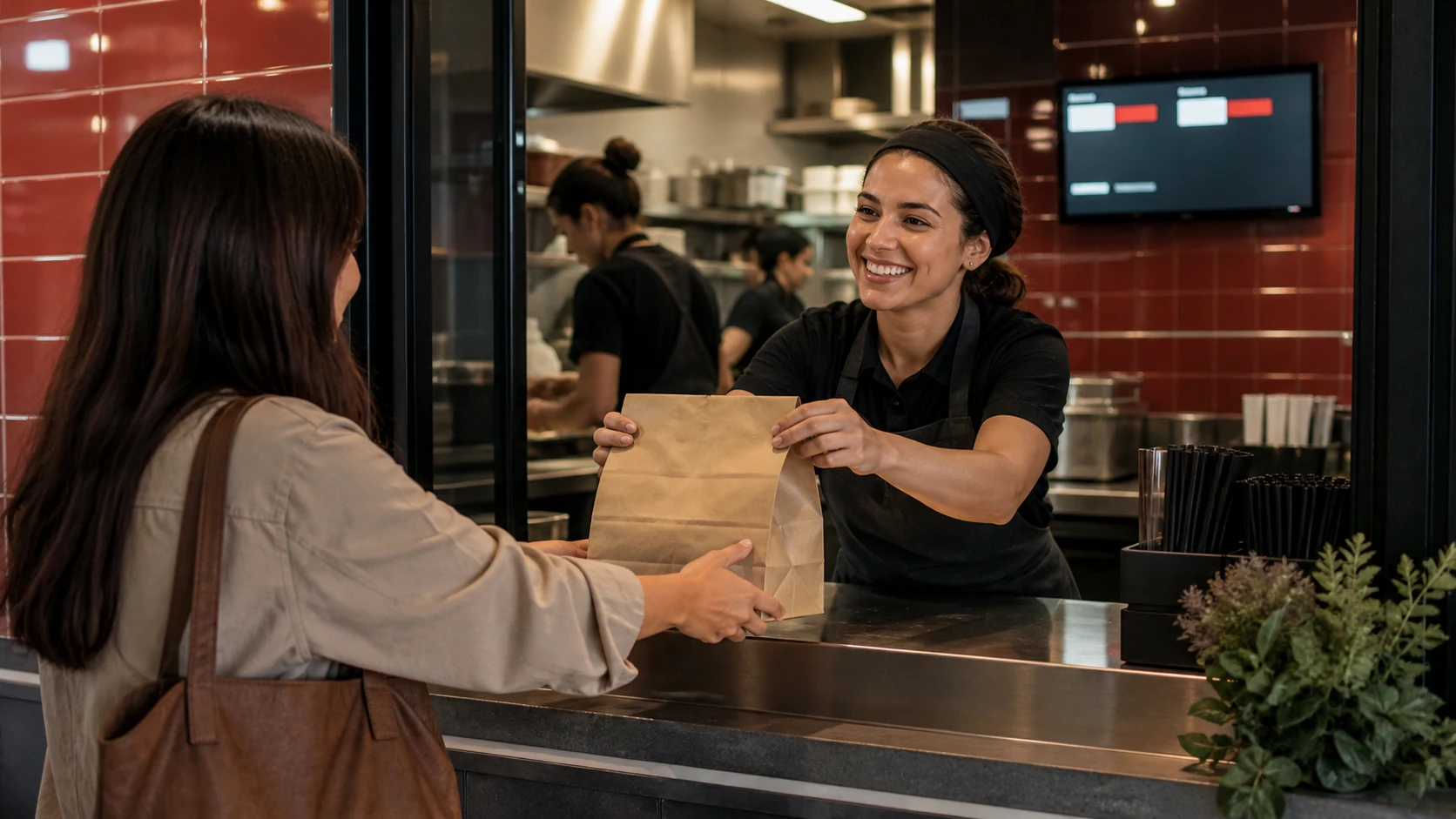
From these public choices, it is evident that the brand aims to organize familiar products, cultural content, and purchasing convenience together. For customers, brand impression comes not only from an advertisement but also from whether they can easily find what they want to eat, complete an order, and receive their meal. This creates a close link between brand expression and daily restaurant operations.
Read member and transaction scale through their respective windows
Full-year and year-end 2025 measures across markets with loyalty programs
- Active loyalty users [1]
- ≈210million usersNearly this figure at year end; 90-day active window
- Systemwide loyalty sales [1]
- ≈37USD billionNearly this full-year amount; identified-member transactions at company and franchised restaurants, not corporate revenue
- Loyalty-market coverage [1]
- 70marketsMarket scope of the loyalty figures above
Loyalty sales show digital touchpoints embedded in buying. They are not incremental sales; dividing annual sales by year-end active users does not yield average order value or annual spend.
- [1] McDonald’s Fourth Quarter and Full Year 2025 Results ↗Page 1 loyalty figures; page 5 definitions of Systemwide sales and loyalty sales · 2026-02-11 · Accessed
02 Facts & context
Key Practices
The official update in 2025 introduced several specific actions: web ordering in Sweden allows customers to order without downloading an app; the in-store food preparation coordination feature schedules preparation based on reminders of customer proximity; and the consumer platform links membership with personalized interactions. These practices are being advanced by specific market and phase, with Swedish web ordering as one regional example.
Their common characteristic is understanding digital features within a real dining process: the customer initiates an order, the system transmits information, the restaurant organizes production, and finally the customer picks up the meal. A disconnect at any point can negate the convenience at the interface level.
03 GSP analysis
Sequencing Improvements Around High-Frequency Needs
From public practices, a success factor to emulate is sequencing improvements around high-frequency needs. Familiar menus make it easy for customers to form choices, convenient entry points reduce operational friction, and food preparation coordination turns digital promises into actual delivery.
Only when these three work together can customers feel an improvement in the overall experience. Phased rollout also preserves room for teams to adjust processes. Evaluation should simultaneously look at order accuracy, customer waiting, employee operational burden, and repeat visits, placing customer experience and restaurant execution within the same set of metrics.
A company seeking to emulate this could start with high-frequency meal bundles, first identifying the three to five most commonly ordered combinations and calculating their share of orders during lunch and dinner peaks. Suppose a fast-food chain finds that its signature burger and fries combo accounts for sixty% of lunch orders. Then, when improving food preparation sequencing, it should prioritize designing a dedicated production line for this combo, avoiding mixing with low-frequency items. Execution responsibility would fall on the shift manager, who needs to check order structure hourly and adjust pre-prepared inventory levels. If only the ordering interface is optimized without changing kitchen scheduling, customers may still churn due to slow service, so it is essential to also observe the number of combos produced per unit of time during peak hours.
Another hypothetical is that a company places the web ordering entry on the same screen as the menu display page and allows customers to save frequently ordered combinations. In this case, the system should record each customer's historical choices and auto-fill them on the next visit to reduce clicks. However, if a customer changes the pickup store at the last minute, the system needs to recalculate preparation time; otherwise, it might prepare too early, causing the product to cool. To distinguish the impact of interface convenience versus execution errors, a company could compare two groups of stores: one group only launches web ordering, while the other also adjusts preparation trigger rules. If order volumes are similar but the latter has lower complaint rates, the issue lies in information transmission rather than entry design.
04 GSP analysis
Causal Mechanism Between Digital Entry and Food Preparation Coordination
Web ordering lowers the barrier for customers to enter the ordering process, but convenience only translates into a service advantage when order information is accurately and promptly transmitted to the production team. The in-store food preparation coordination feature relies on customer location reminders, requiring the system to process location data in real time and trigger preparation commands, while store employees must follow unified execution rules.
If customers arrive early and the meal is not ready, or if preparation occurs too early and product quality declines, the experience suffers. Therefore, clear handoff points need to be established between digital features and store operations, such as automatically sending order confirmations to kitchen display screens or having the shift manager adjust preparation pace based on customer flow. This mechanism does not work automatically; it requires organizational coordination and training.
Between digital entry and food preparation coordination, companies need to make a key decision: should the system trigger preparation immediately after order placement, or wait until the customer is near the store? Suppose a brand chooses the latter. It must then rely on continuous authorization of the customer's phone location, raising privacy concerns and battery drain. If some customers disable location services, the system cannot determine arrival time, potentially delaying preparation. Therefore, companies could design an alternative: on the order confirmation page, let customers actively choose 'prepare now' or 'prepare on arrival,' giving control back to the customer and reducing reliance on backend algorithms. This way, employees only need to follow the order tag without guessing system intent.
Execution responsibility should also include rules for handling exceptional orders. For example, if a customer is delayed by traffic and arrives late, the already prepared meal may be discarded due to prolonged sitting. Companies need to set a time threshold, such as automatically notifying employees to remake the meal if not picked up within fifteen minutes, but the waste cost must be included in the marginal loss of that order. To reduce such losses, companies could train employees to observe customer flow in the pickup area and appropriately delay preparation of non-urgent orders during peak times. If the company operates both delivery and pickup, it must also prioritize between the two order types to avoid delivery drivers' urgency crowding out pickup capacity. These rules should be written into the shift manual and reviewed periodically to test their effectiveness.
Turn digital convenience into an accurate, timely meal
Proposed digital-journey design for a restaurant business
- 01
Choose and order
Make items, prices, restaurant, and pickup method clear.
- 02
Transmit the order
Keep modifications, payment, and preparation status consistent.
- 03
Coordinate arrival
Coordinate preparation with actual arrival and restaurant capacity.
- 04
Check fulfillment
Track accuracy, waiting time, and service issues, then compare incremental contribution.
Convenience depends on restaurant execution. Observe ordering friction, preparation coordination, and pickup outcomes separately, then test whether order contribution improves.
- [1] McDonald’s Fourth Quarter and Full Year 2025 Results ↗Page 1 loyalty figures; page 5 definitions of Systemwide sales and loyalty sales · 2026-02-11 · Accessed
05 GSP analysis
Comparison with Other Channel Strategies
Compared to relying solely on third-party delivery platforms or standalone apps, McDonald's web ordering and in-store food preparation coordination offer a more controllable channel mix. Third-party platforms bring traffic, but restaurants have weaker control over delivery experience and data. Standalone apps can accumulate members, but the download barrier may filter out low-frequency customers. Web ordering sits between the two: no app installation is required, yet orders are directly integrated into the store system.
The dine-in pickup scenario is more conducive to coordinating preparation time than delivery, as customer arrival time can be predicted through location reminders. The trade-off of this strategy is that it requires restaurants to invest more effort in managing the connection between online and offline processes, rather than simply handing orders to delivery drivers. For customers, web ordering reduces steps, but the pickup process still involves waiting, making food preparation coordination the key to experience differentiation.
06 GSP analysis
Experience Chain in Specific Transactions and Usage Scenarios
Consider an office worker who opens McDonald's webpage on his mobile browser during lunch break, selects his usual Big Mac combo, and the system remembers his preference, allowing him to order without logging in. He walks to the restaurant, and his phone's location triggers a preparation reminder en route, so the kitchen starts making the meal. When he arrives, the meal is on the pickup shelf, and he verifies the order and takes it.
The entire process seems smooth, but each step depends on accurate information transfer between front and back of house: the web menu must sync with store inventory, location reminders must account for walking speed and restaurant busyness, and preparation commands must avoid conflicts with dine-in orders. If the customer changes route, the system needs to recalculate time; if orders pile up during peak hours, preparation coordination may fail. Therefore, experience improvement is not a one-time project but an ongoing operational process requiring continuous monitoring and adjustment.
A company seeking to emulate this could hypothesize a regular customer who opens the ordering page on his mobile browser during commute. The system recommends a 'beef burger + medium fries + unsweetened tea' combo based on his order history. He confirms and selects 'pickup at store,' and the page shows an estimated ready time. At this point, the store does not immediately receive a preparation command; instead, it waits for the system to calculate a trigger point based on his real-time location and walking speed. If he stops by the roadside for two minutes to take a call, the location data must be able to detect the stationary state and delay the trigger; otherwise, the meal will be prepared early and cool down. This hypothesis requires companies to define finer states for 'arrival' rather than simply using a distance threshold.
Another hypothesis is that the customer changes to a different branch for pickup at the last minute. Although the web interface allows changing the pickup store, the original store may have already received a preparation reminder and started making the meal. If the system does not reserve a cancellation window, the original store will incur waste costs, and the new store will need to reschedule production. A company could design a 'modifiable period': allow changes without reason before preparation is triggered, but after triggering, charge a small cancellation fee or guide the customer to call customer service. The economic trade-off is that lenient changes improve customer satisfaction but increase store waste, while strict limits reduce flexibility. Execution responsibility should fall on the order management module, which needs to synchronize inventory and production status across stores in real time and record reasons for changes to distinguish between system delays and customer hesitation.
07 GSP analysis
Cost and Economic Trade-off Calculation Basis
The economics of digital services should distinguish between incremental transactions, channel migration, and fulfillment improvements. Online ordering may generate purchases that would not otherwise occur, or it may simply shift existing customers' counter orders to the online channel; the revenue implications differ. Meal preparation coordination may reduce waiting time, reduce rework, or change staffing arrangements. Repeat purchase rates and waiting times are not monetary benefits in themselves and cannot be directly subtracted from transaction fees; it is necessary to first explain how they correspond to actual changes in orders, revenue, or costs.
Drawing on business practice, the incremental net sales revenue from new transactions, after deducting the associated variable costs of ingredients, packaging, payment, and fulfillment, can be treated as the incremental contribution of the transaction. For orders migrated from the counter, compare the cost difference in processing before and after migration, avoiding double-counting the full sales amount as incremental revenue. On this basis, then deduct the costs of ongoing maintenance, training, and related fixed investments. Development expenditures should be presented according to a clearly defined management evaluation period, showing cash outflows and expected usage, and should not present an allocation basis used for internal decision-making as a uniform accounting treatment requirement.
Suppose a restaurant brand pilots online ordering; it can distinguish identifiable existing customers, new customers, and orders of unclear identity in its order records, and then observe changes in conjunction with comparable stores and concurrent activities. Membership status alone is insufficient to prove order incrementality: existing customers may increase purchase frequency, and newly registered members may have previously made purchases offline. Managers should maintain these classification limits and test whether overall transactions and store contributions change in tandem, rather than only looking at the digital channel share.
The costs of meal preparation coordination should also be understood through records of preparation, waiting, and waste under similar time periods and menu structures. If earlier reminders lead to increased post-meal waiting, test the accuracy of arrival time predictions against actual pickup paths; if output drops during busy periods, distinguish among causes such as order mix, staffing levels, and frequent interruptions. After observing discrepancies, then adjust trigger conditions and re-examine customer waiting and product quality, and do not use unvalidated uniform percentage thresholds to decide when all stores should modify processes.
08 Suggested actions
Allocation of Organizational Responsibilities and Work Interfaces
The implementation of digital experience requires clear decision-making authority and responsibility allocation. Typically, the marketing department is responsible for customer-facing feature design, the operations department for setting store execution standards, and the IT department for system integration. In McDonald's case, Swedish web ordering may be led by the local market team but requires underlying support from the global platform.
The in-store preparation coordination feature requires store managers to have the authority to adjust preparation priorities and train employees to follow new processes. If responsibilities are unclear, front-end features may launch without store awareness, or store operations may be chaotic with no one accountable. Therefore, companies should establish a cross-functional team, designate a product owner to oversee the end-to-end experience, and set up regular communication mechanisms. Decision-making authority should be delegated to levels that can quickly respond to customer feedback and store issues, while headquarters provides unified technical standards and data interfaces.
A company seeking to emulate this, if deciding to introduce web ordering and in-store preparation coordination, needs to clarify three types of responsibilities within the organization: the product manager defines the customer journey and feature priorities, the operations manager sets store execution rules and trains employees, and the technology manager handles system integration and data interfaces. Suppose the product manager wants to shorten the preparation trigger distance to improve freshness, but the operations manager worries about kitchen overload during peak hours, and the technology manager points out insufficient location update frequency. The three parties need to jointly set an adjustable default value and authorize store managers to manually override trigger conditions during special periods (e.g., bad weather).
During execution, a situation may arise where front-end features are launched but stores are not updated, because training materials do not cover the new process. A company should establish a cross-functional weekly meeting where store managers report actual usage obstacles, such as employees forgetting to confirm orders or device network delays. Decision-making authority should be delegated to regional managers, allowing them to adjust preparation lines based on store layout, for example, placing pickup shelves closer to the kitchen exit. Headquarters should provide a unified data dashboard showing trigger accuracy and waste rates for each store to distinguish between technical failures and human errors. If a store exceeds waste rate thresholds for three consecutive days, the regional manager should observe on-site and decide whether to roll back the feature.
09 Suggested actions
Practical Path for Piloting, Measuring, and Adjusting
For multi-store restaurant brands, it is recommended to first select a few stores for a pilot, focusing on one of the most common journeys, such as pickup. Before the pilot, baseline data of the current process should be recorded, including order processing time, customer waiting time, and employee operation steps. During the pilot, changes before and after enabling web ordering and preparation coordination can be compared, and qualitative feedback from employees and customers should be collected.
Measurement metrics should include order accuracy, preparation time, customer satisfaction, and employee burden. If the pilot results are positive, the scope can be gradually expanded; if not, analysis is needed to determine whether it is a technical or process issue, and design adjustments should be made. For example, if customers often arrive early and meals sit for too long, the trigger distance for location reminders can be modified. Companies should establish a rapid iteration mechanism to continuously optimize based on data feedback, rather than a one-time full rollout.
A company piloting web ordering and preparation coordination could first select two adjacent stores with different customer flow characteristics: one near office buildings with a concentrated lunch peak, and another in a residential area with dispersed demand throughout the day. Before the pilot, baseline data should be recorded, including average time from order to pickup, proportion of late orders, and the number of times employees are interrupted by order status inquiries. During the pilot, Store A could enable location-triggered preparation, while Store B maintains manual confirmation. After two weeks, compare the data. If Store A's late order rate decreases but employees report frequent false reminders, the location accuracy and walking speed assumptions need to be checked rather than immediately concluding the feature is ineffective.
Measurement metrics should distinguish between customer perceived time and actual preparation time. For example, customers may feel they wait longer due to in-store queues, but the system records no increase in preparation time. A company could add a 'pickup screen showing order status' feature to let customers see 'preparing' or 'ready for pickup,' reducing anxiety. If order accuracy declines during the pilot, analysis is needed to determine whether it is due to web menu and store inventory synchronization delays or conflicts between preparation commands and dine-in orders. In this case, trigger conditions should be adjusted, such as delaying the trigger distance during peak hours, and training employees to prioritize triggered orders. Only through multiple iterations can the right parameter combination for the company's own processes be found.
THE EVIDENCE
Grounding the argument in evidence.
What the source reports
McDonald's growth strategy announced in 2023 linked marketing, core menu, and digital, delivery, drive-thru, and restaurant development, with core products including the Big Mac, fries, and chicken items.
This indicates the company intends to unify brand expression and operational execution within the same strategic framework, rather than treating digitalization as an isolated technology project.
What the source reports
The digital update in 2025 introduced three platforms for restaurants, consumers, and the company, and mentioned web ordering and in-store food preparation coordination in Sweden.
These specific actions show that digital improvements are embedded in real dining processes and are being piloted regionally, reflecting an emphasis on local adaptability.
DECISION POINTS
From understanding to testable action.
Selecting Pilot Stores and Journeys
Suggested observation, not company-verified: whether order accuracy in pilot stores improves, average customer waiting time decreases, and employees report smoother operations.
Establishing a Cross-Functional Responsibility Matrix
Designate a product owner, clarify the specific responsibilities of marketing, operations, and IT in the digital experience, and set up weekly communication meetings.
Suggested observation, not company-verified: whether cross-departmental meetings show responsibility shifting, problem resolution cycles shorten, and employee acceptance of new processes increases.
Designing a Data-Driven Adjustment Mechanism
Collect data on order time, location reminder accuracy, and preparation completion time during the pilot, and set up a weekly review mechanism.
Suggested observation, not company-verified: whether data is used to adjust preparation trigger conditions, customer complaint rates change, and repurchase rates show positive trends.
QUESTIONS TO EXPLORE
What still needs to be established?
- Existing materials do not disclose the specific technical implementation details of web ordering and in-store food preparation coordination, such as the accuracy of location reminders and the trigger logic of preparation commands, which limits in-depth evaluation of their actual effectiveness.
- How McDonald's consumer platform integrates with restaurant-level operational data, and how member personalized interactions affect actual ordering behavior, is not clearly explained in public information.
CONTINUE THE RESEARCH
Explore your question further.
Request the full research report and discuss your market, brand questions and business context with GSP.
Request the full research report ↗