
01 Facts & context
Brand positioning: from event attention to home scenarios
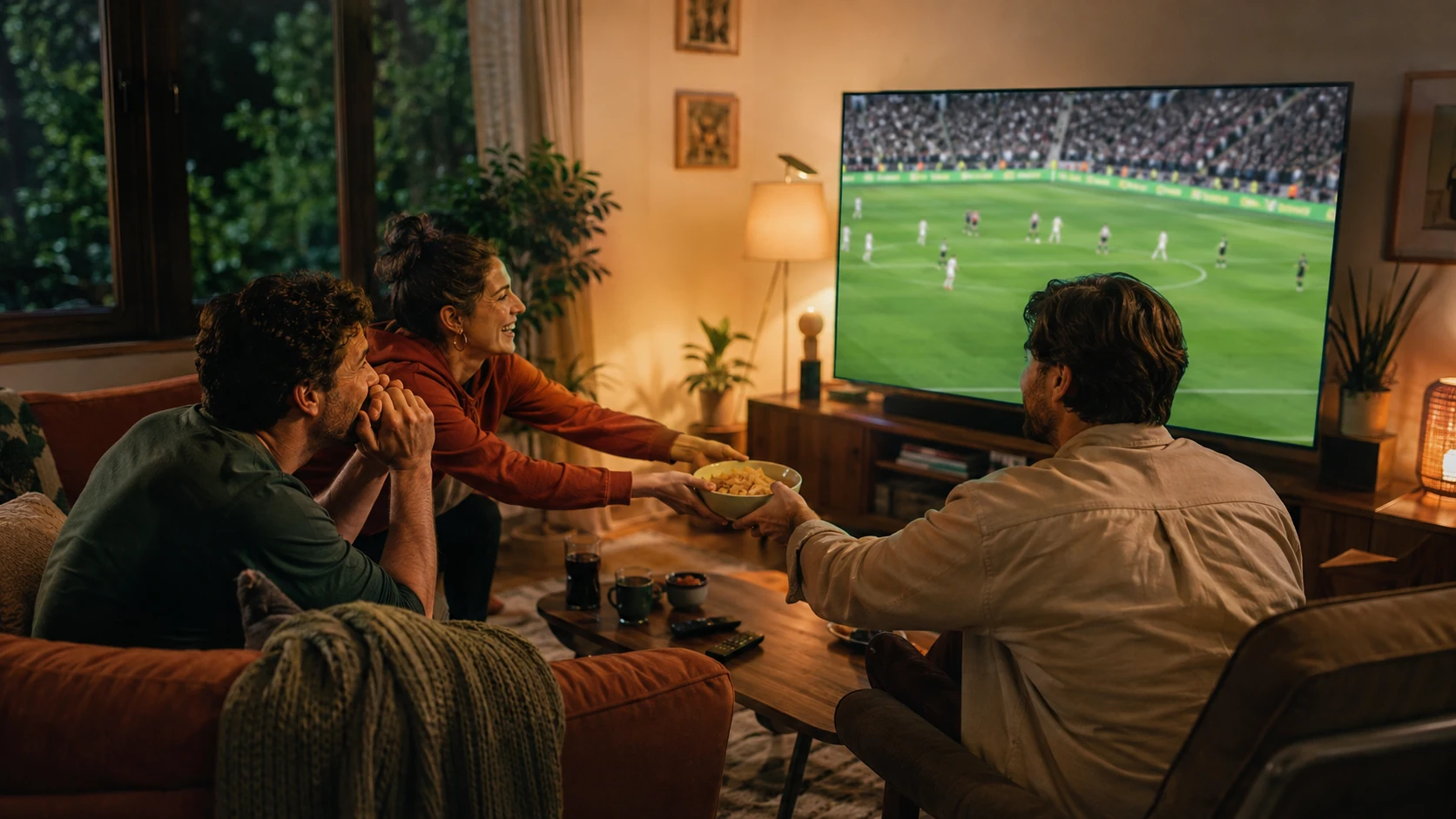
As a sponsor of the 2025 FIFA Club World Cup, Hisense launched the Own the Moment campaign, with officials stating their hope to help fans enjoy the tournament. This communication places the brand in the clear context of watching matches, allowing TV and home appliance brands to express themselves around important moments at home. Another observable direction is Hisense's official introduction of ConnectLife: connecting users with home appliances through digital services, extending brand relationships to daily use. The two are suitable for comparison in the same brand observation, but public information is insufficient to prove that the event campaign and all digital features constitute a unified marketing program.
A sustained viewing occasion across many fan communities
Club World Cup 2025; schedule announced by FIFA
- Participating clubs [1]
- 32clubsTournament participation
- Match venues [1]
- 12stadiumsHost stadiums in the United States
- Tournament window [1]
- 30days14 June–13 July, inclusive
Tournament scale and duration provide context for home viewing; sponsors still need to connect attention to usable experiences.
- [1] Club World Cup 2025 venues and schedule ↗Release body: clubs, stadiums, and tournament dates · 2024-09-28 · Accessed
02 Facts & context
Key practices: sponsorship activities and ConnectLife in parallel
The event campaign centers its narrative on fans and match moments, providing a theme that is easily understood across markets. ConnectLife, on the product level, introduces remote operation and status viewing, involving household tasks such as cooking, washing, drying, and cleaning; the UK website also explains the app's role in the context of laundry scenarios. The former presents how the brand seeks attention, while the latter explains what specific usage experiences exist after attention is gained. The scope of features needs to be understood by device and market, and an application's capability should not be expanded into a unified promise for all Hisense products. For home appliance brands, this boundary is also part of clear product communication.
03 GSP analysis
Making match viewing the starting point for product questions
The value of the match scenario lies in prompting users to proactively raise questions related to the viewing experience or household tasks. When users watch a match, specific needs such as screen clarity, sound quality, and multi-device coordination naturally emerge. Companies seeking to learn from this can design content around the moment of watching, guiding users from interest to a practical understanding of product features. It is important to distinguish that those interested in the event are not necessarily buyers, and interest does not equal purchase intent. Companies should set communication goals to help audiences understand what problems the product solves during match viewing, rather than directly pursuing sales conversion. Existing device users may focus on feature upgrades or scenario optimization, while potential buyers are more concerned about product differentiation; content should cover the questioning paths of different groups.
In terms of operational mechanisms, companies can first define core tasks in the match-viewing scenario, such as watching, recording, sharing, or preparing food and drinks, and then select an available product capability as the focus of demonstration. The marketing team is responsible for extracting user questions, the product team provides functional boundaries, and the channel team arranges on-site experiences. The three links need to collaborate around the same task to avoid a disconnect between communication content and store demonstrations. Conditions for success include a clear target market, stable product supply, and sufficient content production resources. If product features vary by model or region, promise design must limit the scope of application to prevent user confusion due to inconsistent information.
A transferable operation is to first conduct a small-scale pilot, setting up a match-viewing experience area in a single market or a few stores. Users can ask questions about the picture or tasks on-site, and staff demonstrate corresponding features and record consultation feedback. Subsequently, adjust content expression and demonstration processes based on feedback, and then decide whether to expand the scope. Companies should simultaneously prepare pre-purchase experience and post-purchase guidance content; the former helps users understand value, while the latter addresses practical issues in use. If the budget is limited, prioritize existing channels and digital content, and do not pursue large-scale advertising.
Verifiable signals include whether the types of user questions shift from general interest to functional details, whether there are follow-up inquiry behaviors after store demonstrations, and the dwell time and return visits on content pages. Companies need to compare user behaviors from different sources to distinguish the impact of event attention from the product's inherent appeal. If users understand the product but cannot find a purchase entry, the problem may lie in channel coordination; if users take no further action after the experience, it is necessary to check whether the product demonstration matches their needs. Adjusting content, delivery, or resource allocation based on breakpoints is more effective than uniformly increasing advertising. Throughout the process, companies should continuously record version and scope responsibilities to ensure clear ownership for each link.
04 GSP analysis
From thematic memory to experienceable value
The transition between advertising and product descriptions lies in converting thematic memory into specific value that users can verify. Taking a hypothetical ordinary consumer brand as an example, if it sponsors a sports event, the advertisement conveys passion and moments, but if the product description merely lists features, users find it difficult to establish a connection. Original analysis should focus on a verified feature and explain how it solves a real task for users in the event scenario. For instance, a smart TV's quick-start feature can ensure users do not miss the kickoff moment. This connection must be based on facts, not on fabricating unverified capabilities.
In terms of operational mechanisms, brands need to establish a continuous narrative from advertising creativity to product demonstration. The marketing team should define core user tasks in the event scenario, such as 'sharing match moments with family,' and then the product team needs to confirm which existing feature can directly support this task, such as multi-device connectivity or high-definition picture quality. The content team then creates scenario-based explanations around that feature, avoiding vague statements. This process requires cross-departmental collaboration to ensure consistent information, and all expressions are bounded by actual product capabilities, without exaggerating promises.
Conditions for success include: the company must have a clearly verifiable feature point, and that feature must have a natural connection to the event scenario; at the same time, the marketing and product teams need the ability to align quickly and be willing to invest resources in content co-creation. If these conditions are lacking, testing can be done on a small scale first, for example, in specific stores or online channels, combining user consultations and demonstration feedback to adjust communication strategies. At this stage, the focus should be on whether users understand the connection between the feature and the scenario, not just on exposure.
A transferable operation is to first select a verified feature, design a hypothetical user task, such as 'quickly starting the TV on match day,' and then highlight this scenario on product pages or in demonstrations. Verifiable signals include an increase in user inquiries about the feature, immediate feedback after demonstrations, or dwell time on content pages. If signals are positive, the approach can be expanded to more scenarios; if not, it is necessary to check whether the issue is feature comprehension or scenario relevance. Through this iteration, brands can gradually transform sponsorship themes into experienceable product value, rather than remaining at the level of memory.
Connect event creative to a real household task
GSP proposal for sports sponsorship and appliance experience
- 01
Viewing need
Define the viewing or household task.
- 02
Product check
Confirm local models, apps, and feature availability.
- 03
Demo entry
Link creative to a store demo or actionable instructions.
- 04
Usage feedback
Record setup, operation, and support issues.
Start with a market and available model, then test whether viewers can complete the demonstrated task.
05 GSP analysis
Model and market scope should be included in promise design
Brands that draw on sports or cultural sponsorships should, when designing product communication, first clarify the boundaries of their promises: which models support the stated features, which markets offer the service, through what entry point users activate it, and who is responsible for subsequent maintenance. It is recommended to use official product pages or customer service confirmations as the basis, and create an internal checklist to avoid generalizing feature descriptions from a single market into a promise for the entire product line. This framework helps content teams accurately express themselves in communication, preventing audience confusion due to model or regional mismatches.
06 GSP analysis
Different content is needed for event rhythm and daily use rhythm
Short-term event attention and long-term household tasks have different content rhythms. Watching a match is a concentrated, high-arousal period, with users' attention brief and focused on the game process; in contrast, laundry, cooking, and other chores are dispersed, repetitive daily matters, with user needs changing before, during, and after the task. If brands want to cater to both scenarios, they need to differentiate content functions: event content is used to build emotional connection and brand memory, while product content must provide clear operational guidance and problem-solving solutions. The two should not be simply spliced together, but should transition naturally through user tasks, for example, from 'how to get a better viewing experience' to 'how to handle post-match chores more conveniently.'
Pre-purchase experience and post-purchase guidance need to form a continuum. In the event scenario, users may encounter the brand or product concept for the first time; at this point, content should focus on feature demonstrations and scenario immersion, helping users understand how the product fits into their lives. After purchase, users need operation instructions, troubleshooting, and maintenance advice specific to their model. Companies seeking to learn from this can design a phased content system: in the early stage, use storytelling to showcase usage value; in the later stage, provide structured practical information. At the same time, ensure channel consistency, such as setting up clear product entry points on event pages and guiding users to subsequent support content in product packaging or manuals.
Achieving this continuity requires internal mechanisms. The marketing team is responsible for capturing event hotspots and planning themed content, the product team needs to provide accurate feature descriptions and applicable conditions, and the customer service team should prepare responses to common questions. It is recommended that companies establish a cross-departmental content review process to ensure external information is not exaggerated or vague. Additionally, user feedback channels can be set up to collect issues encountered before and after purchase, which can be used to optimize content. If resources are limited, start with a pilot on a core product, testing content linkage effects in a single market or channel, and then gradually expand.
Verifiable signals include the conversion path of content access, the topic distribution of user consultations, and changes in the types of after-sales issues. For example, if users click from event content to product pages and stay for a long time or initiate consultations, the scenario connection is effective; if after-sales consultations frequently involve operational questions, it indicates a gap in guidance content. Companies should regularly analyze these signals and distinguish between short-term campaign effects and long-term usage habits. If event attention does not translate into actual experience, it may be necessary to adjust content focus or channel strategy, rather than simply increasing advertising. Ultimately, brands should flexibly adjust content rhythm and resource allocation based on data feedback, creating a virtuous cycle between short-term attention and daily needs.
07 GSP analysis
How brand, channel, and service continue the same question
The core of how brand, channel, and service continue the same question lies in whether information handoffs are clear. The product team should first confirm functional facts, clarifying which devices and markets support a certain capability, to avoid content teams making overpromises based on incomplete information. The content team then translates facts into scenario explanations, describing how the feature creates value in specific household tasks. The channel team is responsible for demonstrating the available scope, ensuring that store or online displays are consistent with actual product capabilities. The service team needs to handle subsequent user inquiries, record common issues, and feed them back to the product and content teams, forming a closed loop. This division of responsibilities reduces user confusion caused by inconsistent information.
In terms of operational mechanisms, it is recommended to establish a cross-functional content calibration process. Before a marketing campaign launches, the product, content, channel, and service teams jointly verify model lists, feature entry points, and after-sales scripts. The case background cannot prove that Hisense already has this mechanism internally, but companies seeking to learn from this can proactively establish it. For example, suppose an ordinary consumer brand launches a new feature; before the marketing department creates promotional materials, it should require written confirmation from the product department, the channel department confirms the demonstration model version, and the service department prepares FAQs. This ensures that every touchpoint answers the same question rather than expressing different views.
Conditions for success include: the company has clear cross-departmental communication channels, product information has version management, and channel demonstrations have standardized processes. If these foundations are lacking, pilot on a small scale first, selecting a single market or a few stores, and designate a person responsible for information synchronization. Applicable conditions also require that the company can tolerate initial imperfections and allow teams to adjust through trial and error. If the organization is hierarchical and information transmission is slow, senior management must drive the initiative and clarify the responsibility matrix. Conversely, if the team is flexible, a temporary working group can be quickly established.
A transferable operation is to design a complete path from awareness to use around a user task. For example, a sports sponsorship campaign sparks user interest in screen quality; the content team should explain how picture quality technology enhances the viewing experience, channel demonstrations allow users to feel it, and the service team prepares to answer installation or setup questions. Verifiable signals include: a reduction in user inquiries about feature applicability, users accurately reciting feature boundaries after demonstrations, and a decline in complaints about information inconsistency in service tickets. These signals need to be compared with pre- and post-pilot data, but should not presuppose inevitable improvement; they must be evaluated based on actual conditions.
08 GSP analysis
How to explain changes between exposure and feature usage
To explain changes between event exposure and product feature usage, observers should distinguish signals at different levels. Verifiable signals include: whether brand search volume rises during the campaign, whether the access sources of product feature pages include campaign content, and whether store or online consultations include questions related to match viewing. These signals help determine whether exposure converts into interest, but interest does not equal purchase intent, let alone actual usage. If downloads or registrations increase, further examination of activation rates, feature call frequency, and other subsequent behaviors is needed to determine whether users truly enter the usage phase.
The comparable business scope should be limited to specific markets, device models, and feature modules. For example, a TV's match-viewing mode and a washing machine's remote start belong to different usage scenarios, and their data changes should be tracked separately. If app downloads increase during a campaign in one market but not in another, it may be due to local device compatibility differences or seasonal promotions, rather than different campaign effects. Therefore, when comparing, ensure the business scope is consistent, avoiding mixing data from different product lines.
Alternative explanations should be prioritized. Download growth may be driven by app store recommendations, seasonal promotions, or media reports, rather than the direct effect of the sponsorship. Insufficient device availability limits user attempts, and installation issues may lead to uninstalls after download. Additionally, the campaign audience may have low overlap with existing users; exposure may reach non-target groups, making it difficult to convert into feature usage. These factors should be raised as possibilities rather than directly attributing success or failure to the campaign.
To verify the association, controlled observations can be designed: compare feature usage data for the same market and product line during campaign and non-campaign periods; or conduct campaigns in different markets simultaneously and observe data differences. At the same time, collect user feedback, asking about their channels for learning about the product and usage barriers. If exposure leads to more inquiries but high installation failure rates, prioritize solving installation guidance issues; if traffic is high but dwell time is short, content may not match user needs. Adjusting content or delivery based on this evidence, rather than simply increasing advertising, can gradually build a credible chain from exposure to usage.
09 Suggested actions
Organize a small-scale pilot around a deliverable scenario
For companies seeking to learn from this, if they want to verify whether event attention can connect to home product experiences, it is recommended to first define a deliverable scenario and then organize a small-scale pilot. The first step is to clarify the target audience, specific tasks, and available products, for example, taking 'fans watching matches hope to improve picture quality or convenient operation' as a hypothesis, and selecting a device that is already on the market and functionally stable as the demonstration object. At this point, avoid broadly promoting brand concepts; instead, focus on real questions users might ask on-site, so that content, demonstrations, and consultations all revolve around the same task.
Subsequently, check whether the handoffs between content, demonstrations, consultations, and feedback are smooth. The content team should prepare concise scripts explaining how product features solve viewing pain points; demonstrators need to be familiar with device operations and able to guide experiences; consultation channels should record user questions and forward them to the product team. At the same time, clarify the scope of responsibility and content versions for each link to prevent inconsistent information. If handoff breakpoints are found, prioritize fixing the process rather than expanding publicity, because users may lose interest once they encounter unanswered questions.
Conditions for establishing a small-scale pilot include: a clear target market, stable product delivery, and sufficient content and human resources. It is recommended to choose a single store or online community for implementation to facilitate concentrated observation of user reactions. Before the pilot, set verifiable signals, such as whether users proactively ask about feature details, whether they are willing to leave contact information, and whether they generate purchase intent or subsequent usage inquiries after demonstrations. These signals help determine whether the scenario truly touches needs, rather than just staying at the exposure level.
During the pilot, record feedback from different links, distinguishing breakpoint types such as 'did not understand content,' 'could not find the product,' 'could not experience the feature,' and 'encountered problems during use,' and adjust content, delivery, or resource allocation accordingly. If feedback shows users have limited interest in the feature itself, the scenario may not be sufficiently related to the product; if consultation volume is high but conversion is low, check price or channel coordination. Through small-scale iteration, companies can accumulate experience and then decide whether to expand to larger markets, avoiding blind investment.
10 Suggested actions
Adjust content, delivery, or resource allocation based on breakpoints
When companies seeking to learn from this undertake event or cultural sponsorships, they can break the audience journey into multiple breakpoints and judge which link has the problem. 'Did not understand' means the audience is unclear about the brand proposition or product value; 'could not find' means the audience is interested but cannot locate the campaign page, store, or product entry; 'could not experience' means the demonstration environment, model, or service conditions do not match; 'problems during use' involves installation, operation, or after-sales. It is recommended to collect evidence for each link separately rather than uniformly increasing advertising. If evidence for a certain link is weak, prioritize supplementing content or channels rather than expanding exposure.
THE EVIDENCE
Grounding the argument in evidence.
What the source reports
Hisense launched the Own the Moment campaign as a sponsor of the 2025 FIFA Club World Cup.
GSP analysis: Viewing moments provide a clear communication context for the brand, but sponsorship status alone does not prove changes in purchase or usage behavior.
What the source reports
ConnectLife's official introduction describes the connection between digital services and home appliance tasks.
GSP analysis: Digital services offer an entry point for discussing post-purchase experiences; whether they connect with event communication still requires specific project evidence.
What the source reports
The UK website introduces the role of ConnectLife in the context of laundry scenarios.
GSP analysis: Explaining functions with specific tasks helps define the scope of discussion; this example cannot be extrapolated as a commitment for all models and markets.
DECISION POINTS
From understanding to testable action.
Verify the connection between scenario and product
In your own activities, select a clear user task and check the applicable models, markets, and service entry points for related products one by one.
Suggested observation: Can users clearly state why the feature is relevant to their task, and at which condition do their questions concentrate?
Record key handoffs
Write down the information that needs to be passed between content, demonstrations, consultations, and after-sales into a responsibility checklist.
Suggested observation: At which handoff point do repeated explanations or conflicting promises appear, and does it change with corrections?
Review attention and usage separately
Use a consistent scope to record communication exposure, product understanding, and actual task feedback, while retaining promotional and supply changes.
Suggested observation: Do changes in different links move in the same direction, and is existing record keeping sufficient to explain differences?
QUESTIONS TO EXPLORE
What still needs to be established?
- What process evidence is still needed to determine whether the event campaign and ConnectLife have a unified program arrangement?
- What usage and user research materials are still needed to distinguish the relationship between event awareness and specific product choices?
CONTINUE THE RESEARCH
Explore your question further.
Request the full research report and discuss your market, brand questions and business context with GSP.
Request the full research report ↗